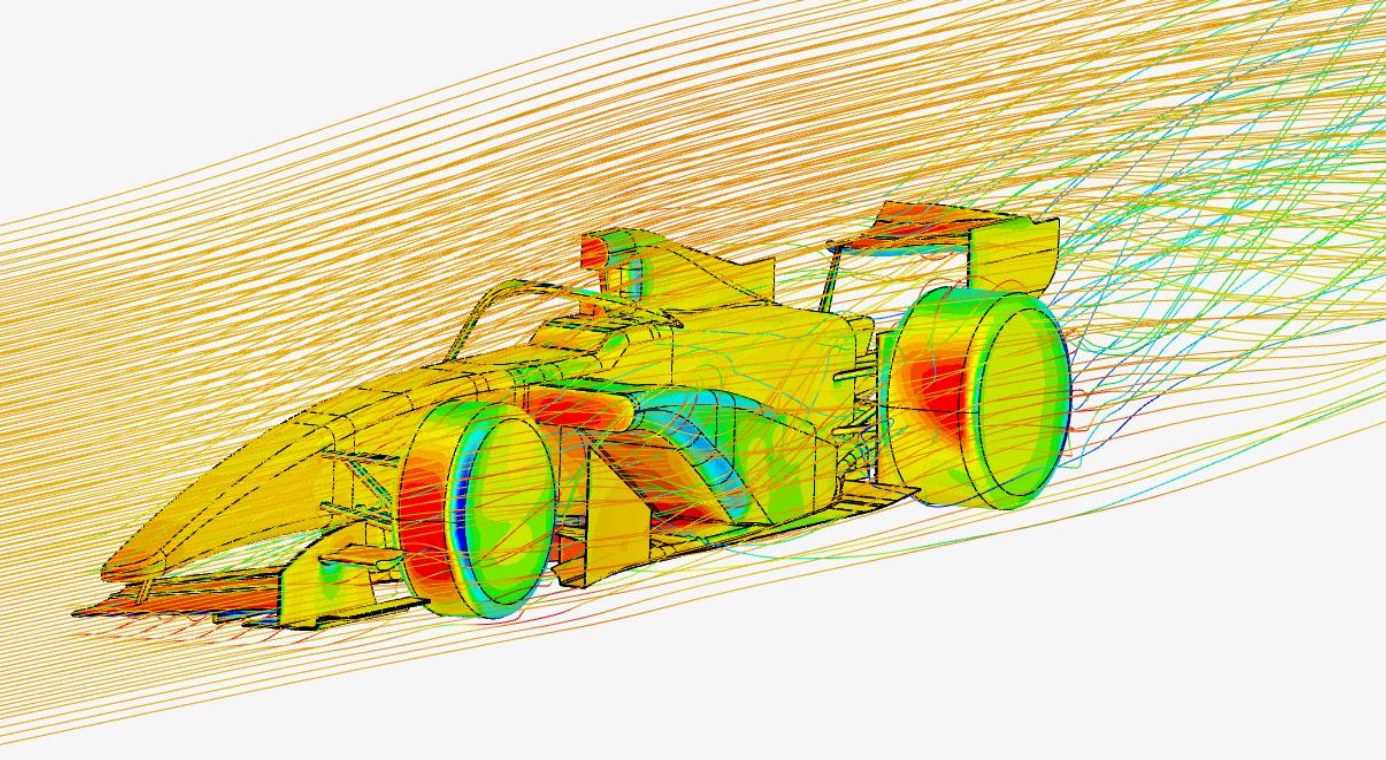
INDEPENDENT ENGINEERING PROJECT
Formula 1 Aerodynamic Design
& CFD Optimisation
CATIA • SimScale CFD • Vehicle Aerodynamics • FIA 2026 Regulations
Project Description
This independent project investigated the aerodynamic development of a Formula 1 concept compliant with the 2026 FIA regulations. A baseline vehicle was developed in CATIA and evaluated using SimScale CFD before iteratively refining the front wing, rear wing and floor to improve aerodynamic performance.
Project Snapshot
CATIA
Developed the baseline and final Formula 1 vehicle concepts.
SimScale CFD
Evaluated aerodynamic performance throughout the design process.
FIA 2026
Vehicle concept developed in line with the proposed regulations.
Optimisation
Iterative improvements supported by CFD analysis.
My Contributions
I independently designed and evaluated the Formula 1 concept by developing CAD models in CATIA, performing CFD simulations in SimScale and using the simulation results to guide aerodynamic improvements throughout the design process.
Vehicle Design
- Developed the baseline Formula 1 concept in CATIA.
- Designed aerodynamic components including the front wing, rear wing and floor.
- Updated the geometry through multiple design iterations.
CFD Analysis
- Performed CFD simulations using SimScale.
- Evaluated pressure distribution and airflow behaviour.
- Compared baseline and revised aerodynamic concepts.
Design Optimisation
- Used CFD results to support engineering decisions.
- Refined the front wing, rear wing and floor to improve aerodynamic performance.
- Finalised the vehicle concept following iterative evaluation.
Engineering Objective
The objective of this project was to develop a Formula 1 concept compliant with the 2026 FIA regulations and improve its aerodynamic performance through iterative design. CFD simulations were used to evaluate each design change and support engineering decisions throughout the development process.
Baseline Vehicle (LAMA_01)
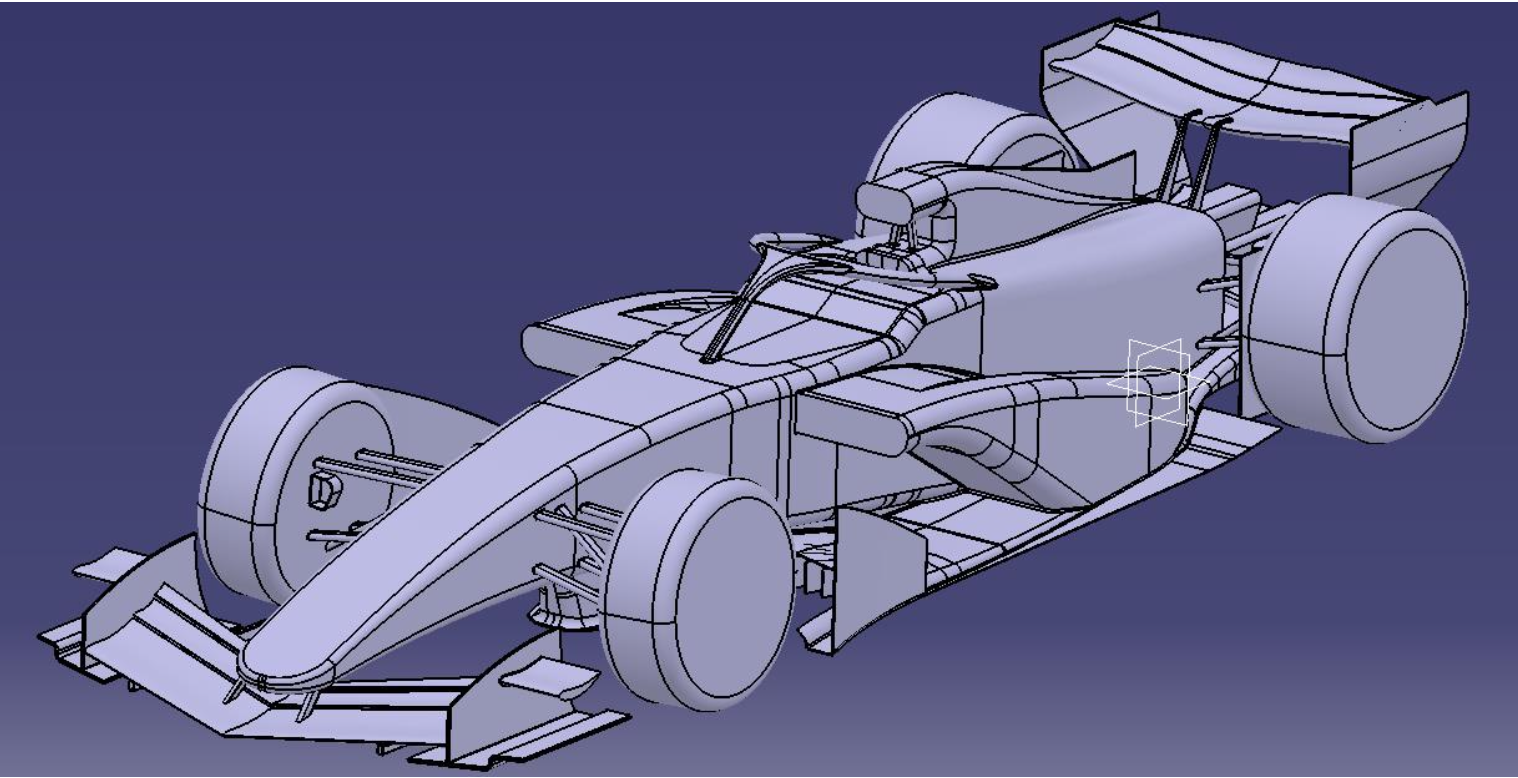
LAMA_01 Baseline Formula 1 Concept
The baseline vehicle established the starting point for aerodynamic development. It provided a reference configuration for evaluating the effect of subsequent front wing, rear wing and floor modifications using CFD analysis.
- Developed in CATIA.
- Designed in accordance with FIA 2026 Issue 10 regulations.
- Used as the reference model for aerodynamic comparison.
Front Wing Development
The front wing was redesigned to improve airflow management and increase front downforce while remaining compliant with the 2026 FIA regulations. CFD analysis was used to compare the baseline and revised designs before selecting the final configuration. The final design achieved approximately a 40–45% downforce reduction between Z-mode and X-mode, consistent with the expected behaviour of the 2026 regulations.
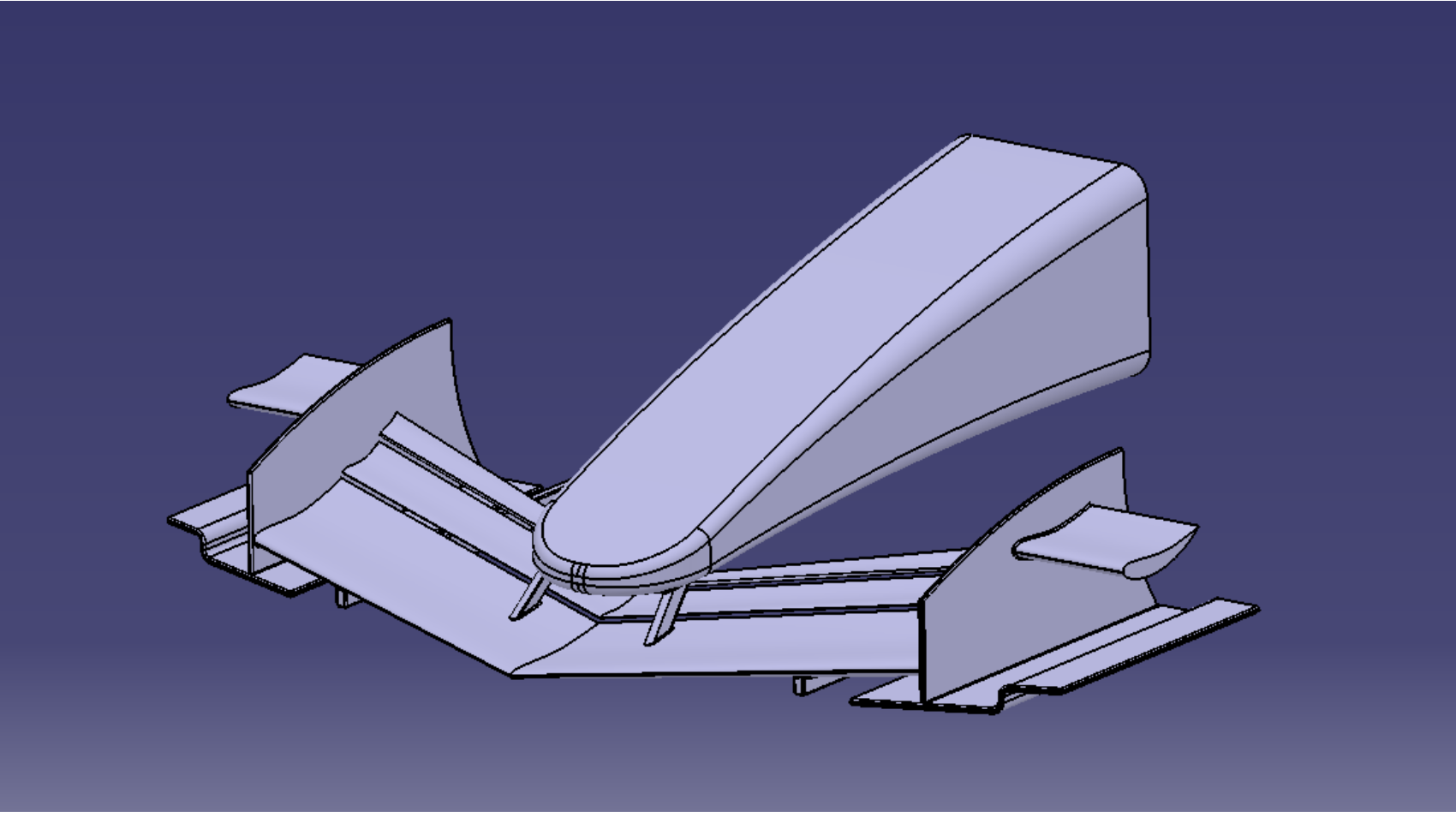
Initial Front Wing Design
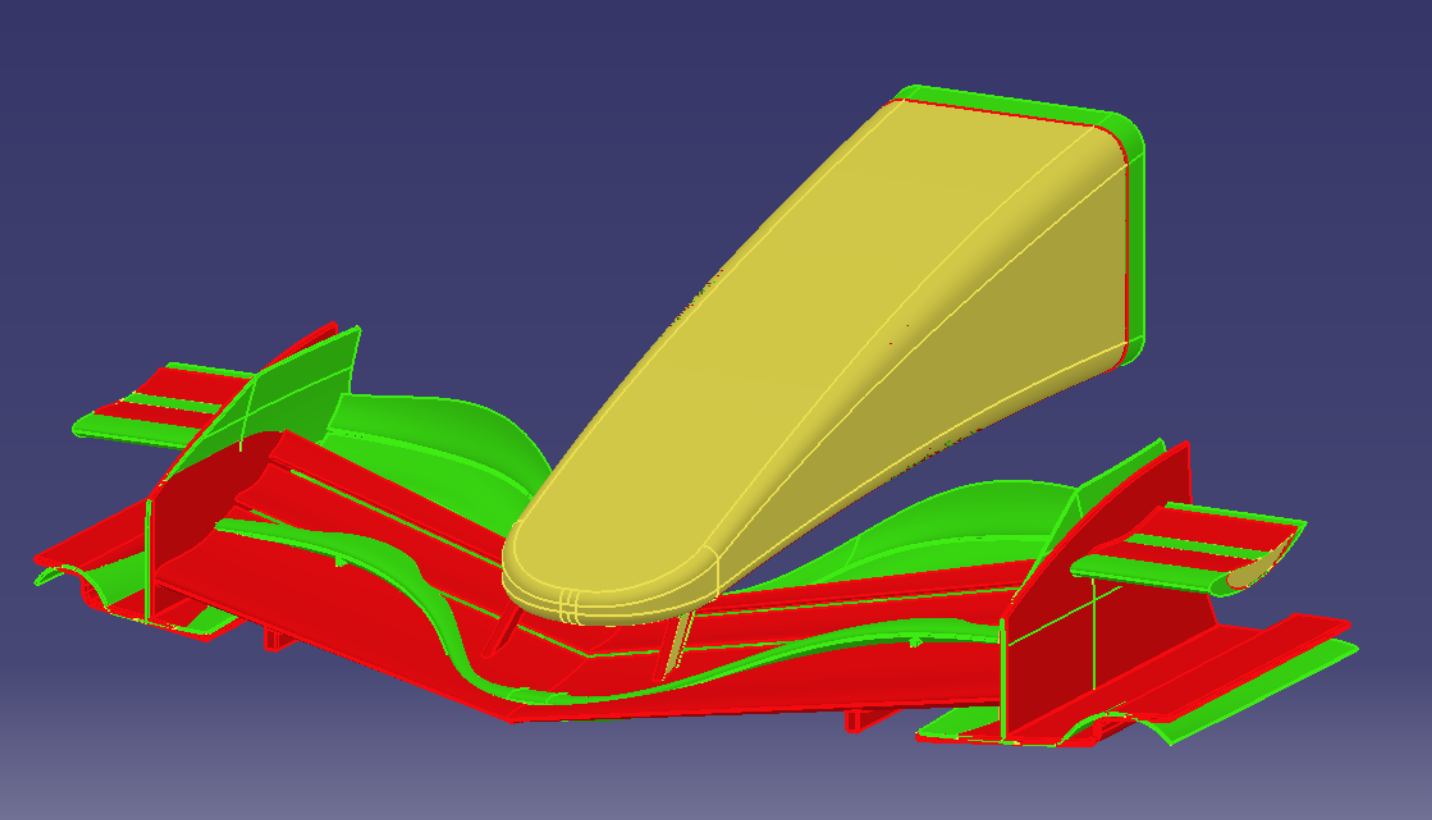
Baseline vs Final Front Wing
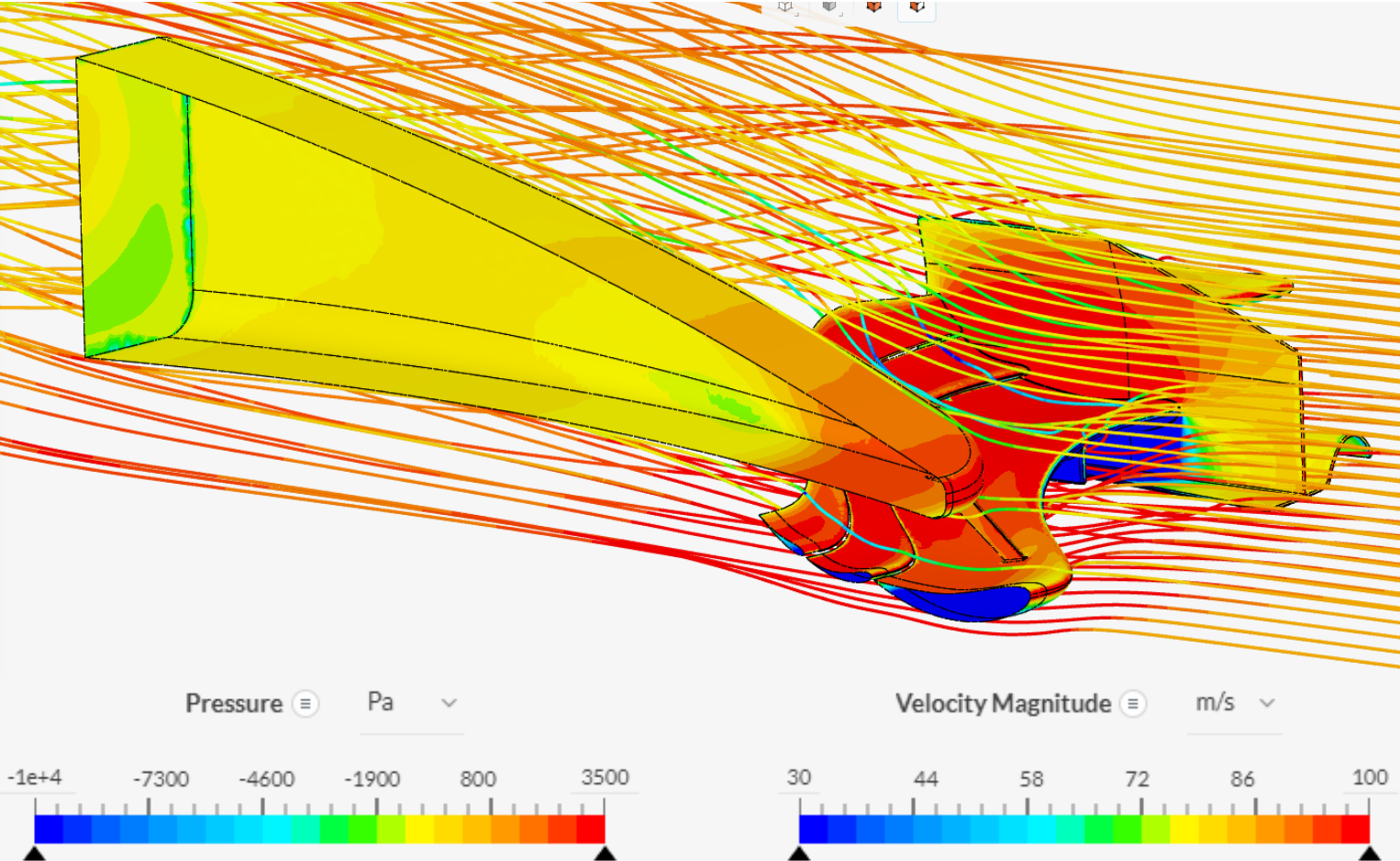
Pressure and Velocity Distribution Around the Final Front Wing
Rear Wing Development
The rear wing was refined to improve aerodynamic efficiency while maintaining stable airflow over the rear of the vehicle. CFD analysis was used to compare the baseline and updated designs before selecting the final geometry. The final rear wing improved downforce by up to 17% over the initial iteration while maintaining the target aerodynamic behaviour.
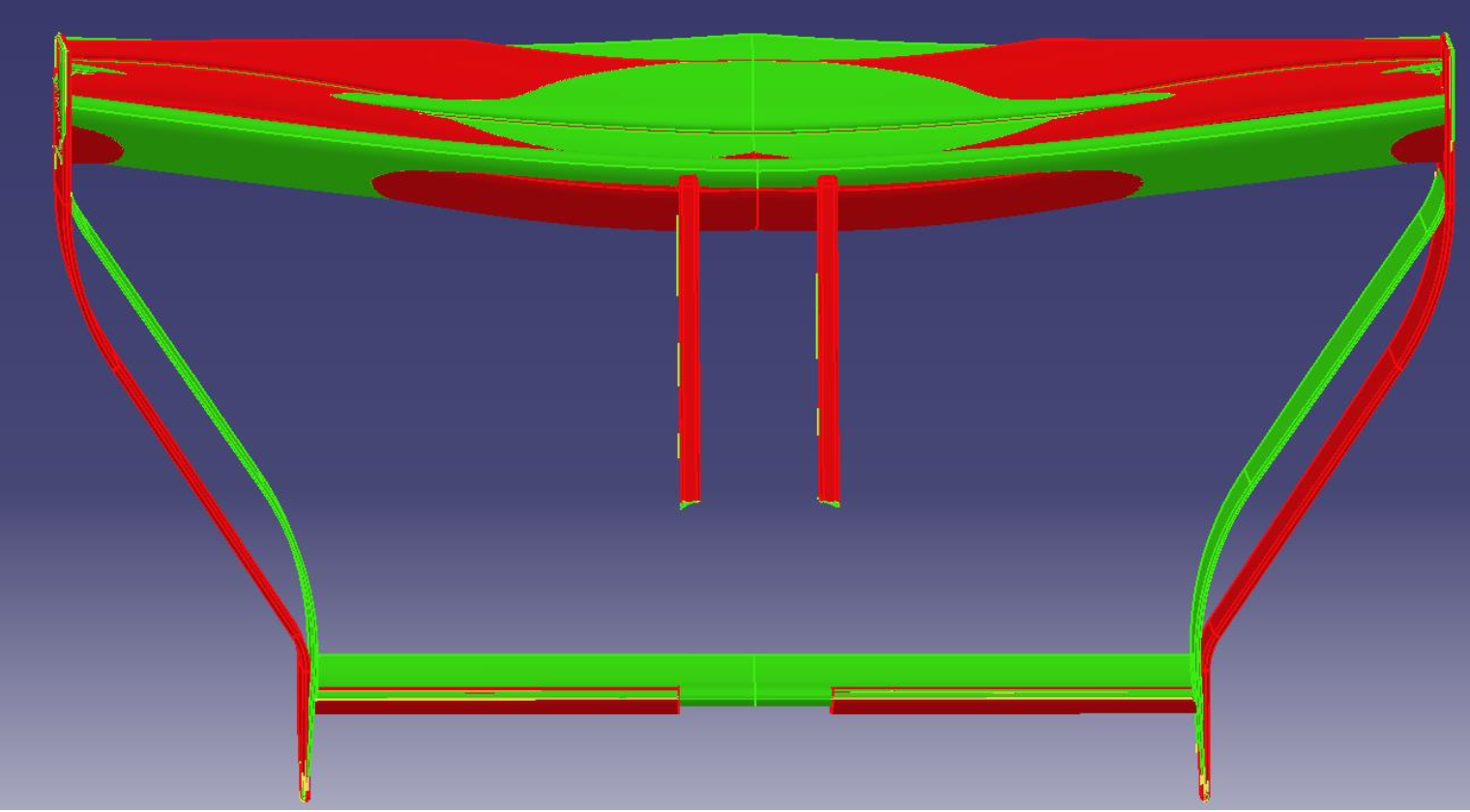
Baseline vs Final Rear Wing
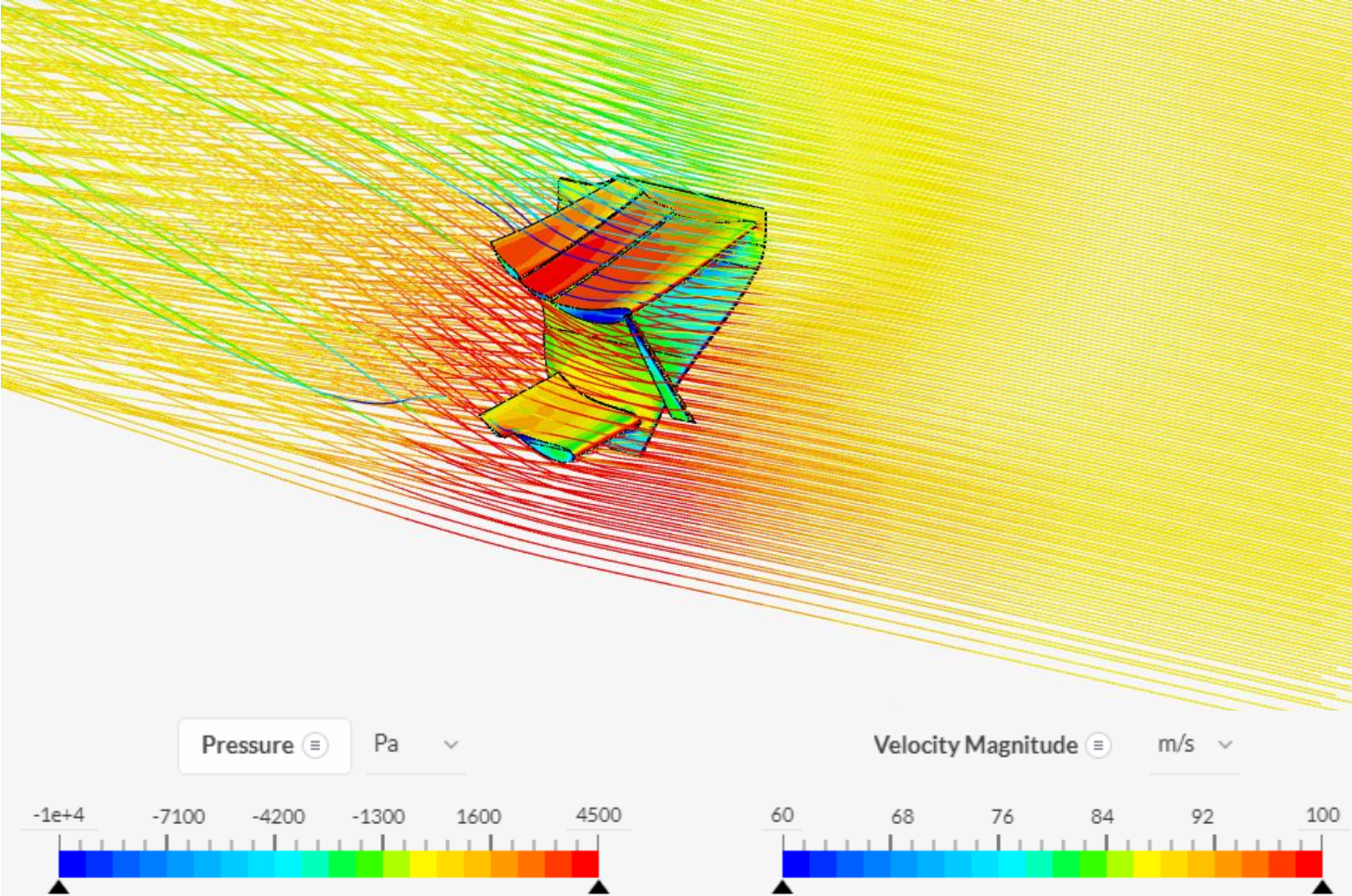
Pressure and Velocity Distribution Around the Final Rear Wing
Floor Development
The floor was redesigned to improve underbody airflow and maximise ground effect. CFD analysis was used to compare the baseline and updated floor geometry, supporting the final design selection. The final floor design improved aerodynamic performance by up to 21% at 150 km/h and 7% at 320 km/h compared with the initial iteration.
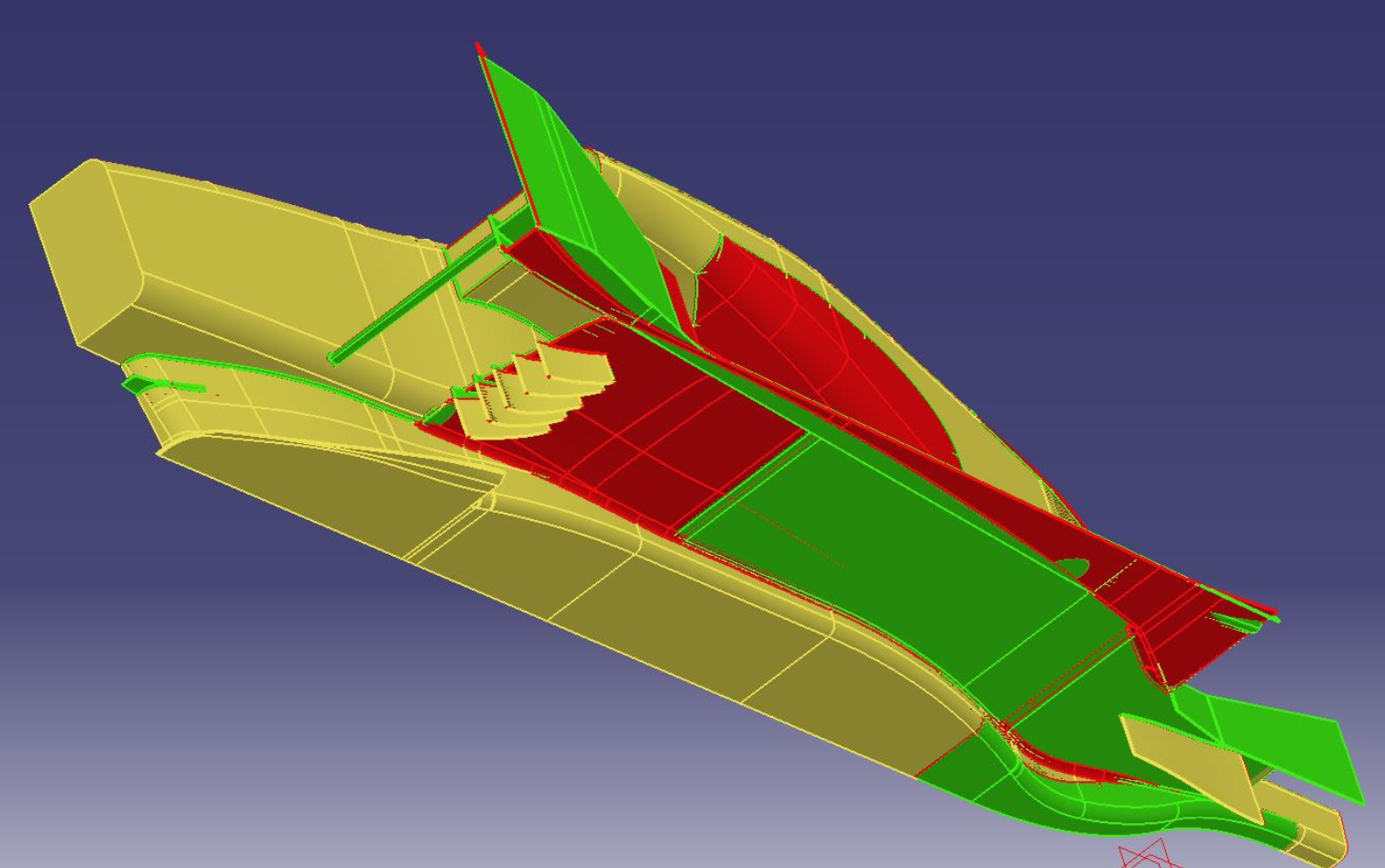
Baseline vs Final Floor Design
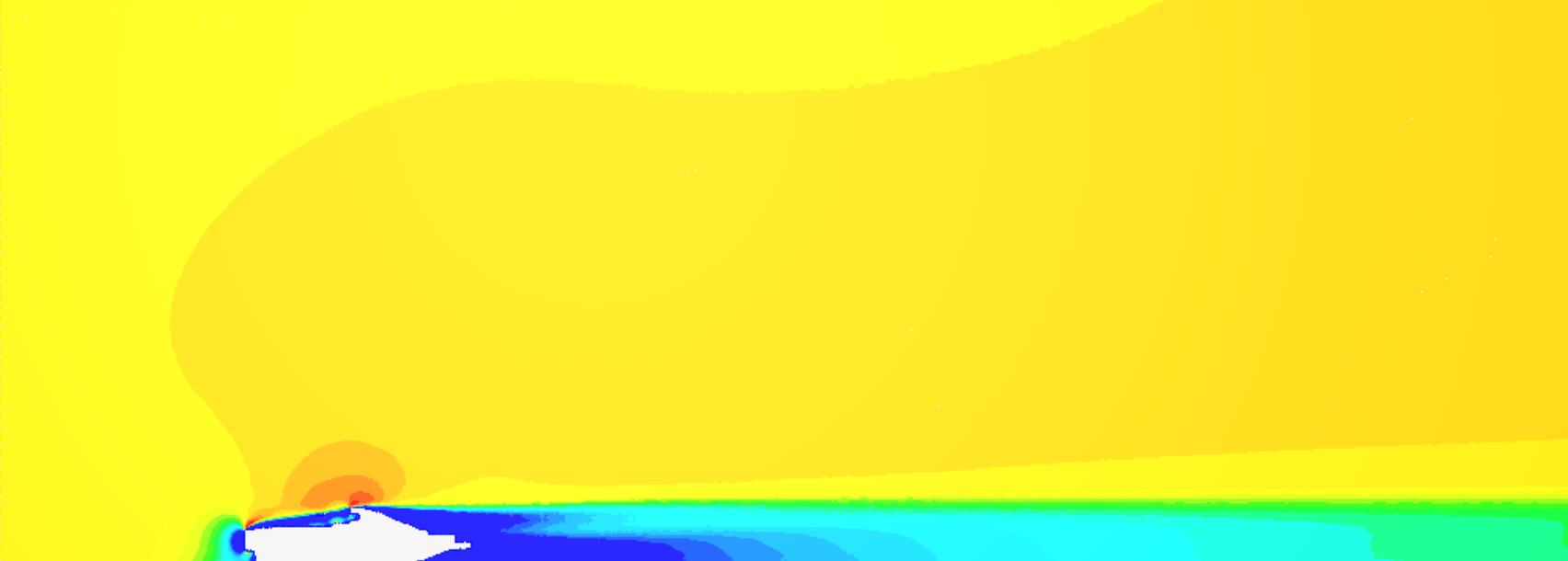
Velocity Distribution Beneath the Floor
Final Aerodynamic Concept (LAMA_02)
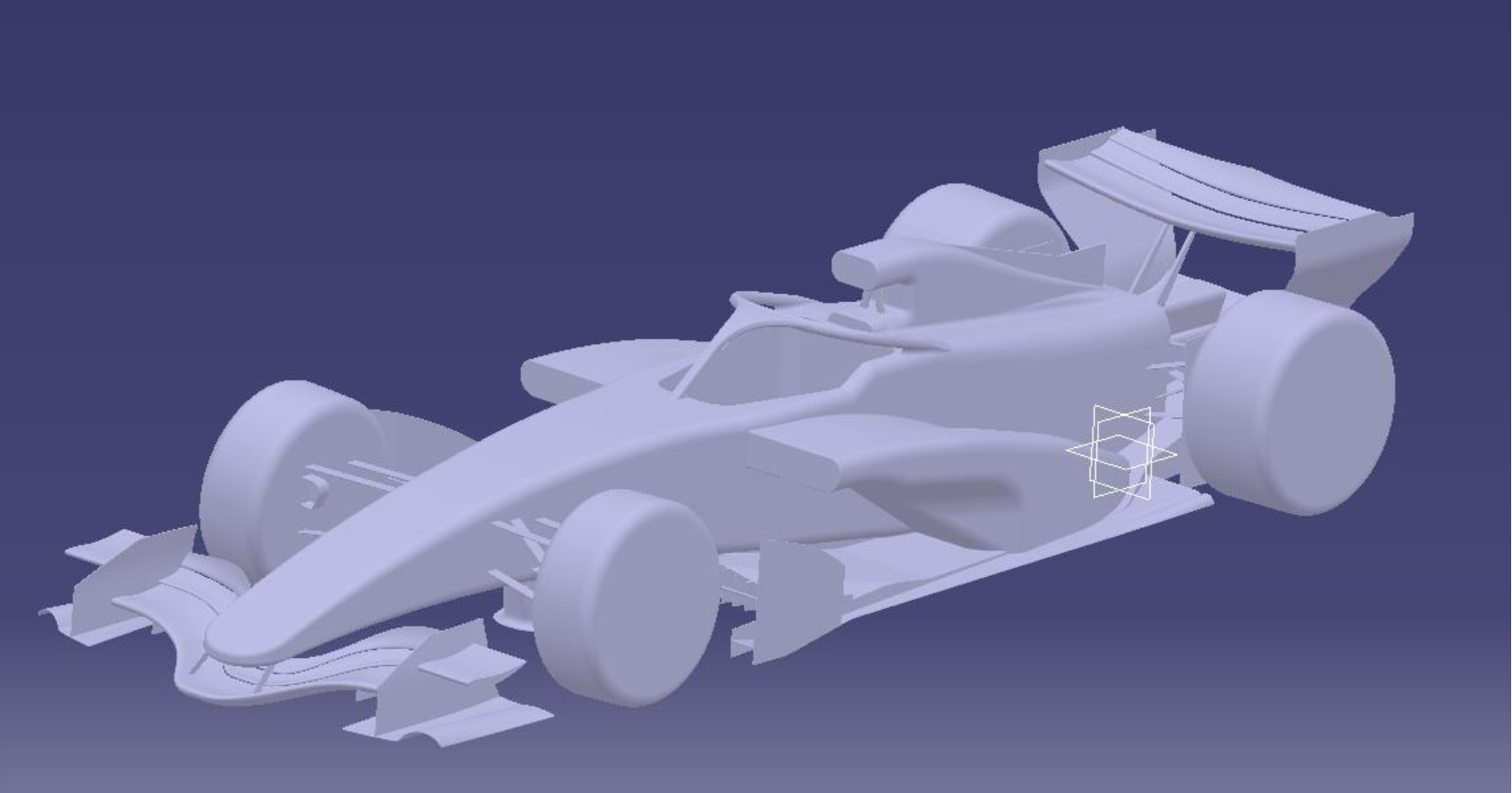
LAMA_02 Final Formula 1 Concept
The final vehicle combined the aerodynamic improvements developed for the front wing, rear wing and floor into a single design. CFD simulations confirmed the overall aerodynamic behaviour before the concept was finalised.
- Integrated all aerodynamic improvements.
- Evaluated using CFD.
- Final concept developed in accordance with the 2026 FIA regulations.
Overall Aerodynamic Performance
Airflow around the final vehicle was analysed to evaluate the combined effect of the aerodynamic developments. The final CFD evaluation confirmed that the aerodynamic concept met the intended performance objectives and demonstrated improved behaviour following the iterative front wing, rear wing and floor development.
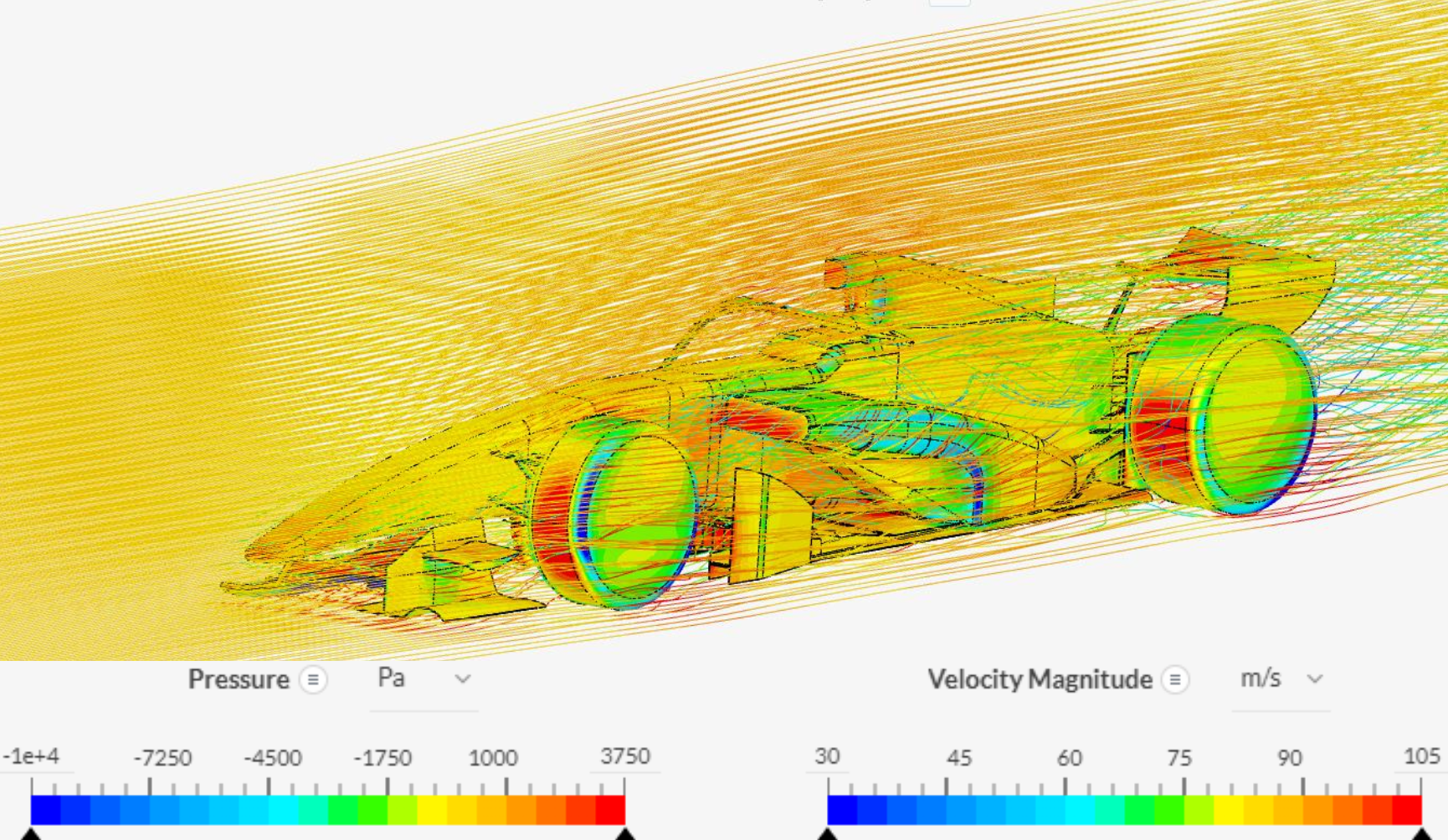
Airflow Around the Final Vehicle (LAMA_02)
Conclusion
This project demonstrated an iterative approach to aerodynamic vehicle development by combining CAD design with CFD analysis. Each design modification was supported by CFD analysis, resulting in measurable improvements across the front wing, rear wing and floor before the final LAMA_02 concept was completed.