University of Sheffield • MSc Aerospace Engineering
Tricopter UAV
Design and Development
Design, Manufacturing, Assembly and Avionics Integration
Project Description
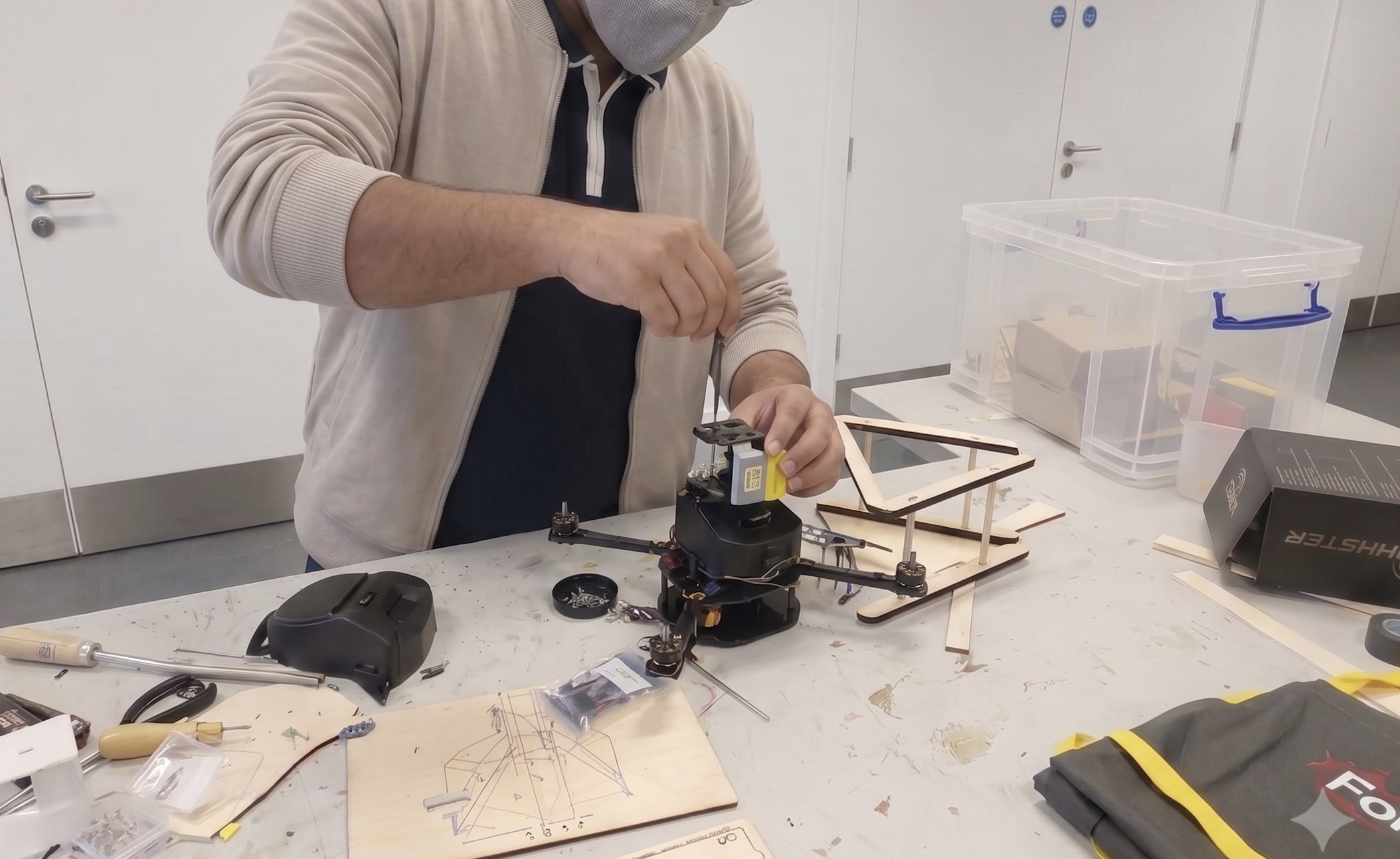
As part of a six-member MSc team, we designed and built a lightweight tricopter UAV for aerial inspection and surveillance. My work focused on the mechanical design, manufacturing and integration of the prototype.
Project Snapshot
Carbon Fibre
Lightweight composite airframe designed for high strength and low weight.
Tricopter UAV
Three-rotor configuration with a servo-actuated rear motor for yaw control.
< 1 kg
Final prototype maintained a total weight below 1 kg.
£190
Completed within the allocated £300 project budget.
My Contributions
As part of a six-member MSc aerospace engineering team, I contributed across multiple stages of the project, from design and manufacturing to systems integration and software setup. Final assembly was completed collaboratively as a team.
Mechanical Design
- Designed the CAD models for the airframe, base plate, pivoting arm and camera gimbal.
- Contributed to the airframe, base plate, pivoting arm and gimbal design.
- Supported iterative design improvements throughout the project.
Manufacturing
- Manufactured prototype and carbon fibre components.
- Prepared parts for assembly and integration.
- Assisted in refining components to improve manufacturability.
Systems Integration
- Installed the flight controller, ESCs, motors and wiring before configuring and calibrating the system.
- Performed flight controller configuration and software calibration.
- Supported subsystem verification before final testing.
Team Collaboration
- Worked closely with the team during prototype assembly and system integration.
- Participated in design reviews and iterative improvements throughout development.
Design Evolution
We went through three design iterations before settling on the final configuration. Each version improved the internal layout, reduced weight and made the prototype easier to manufacture.
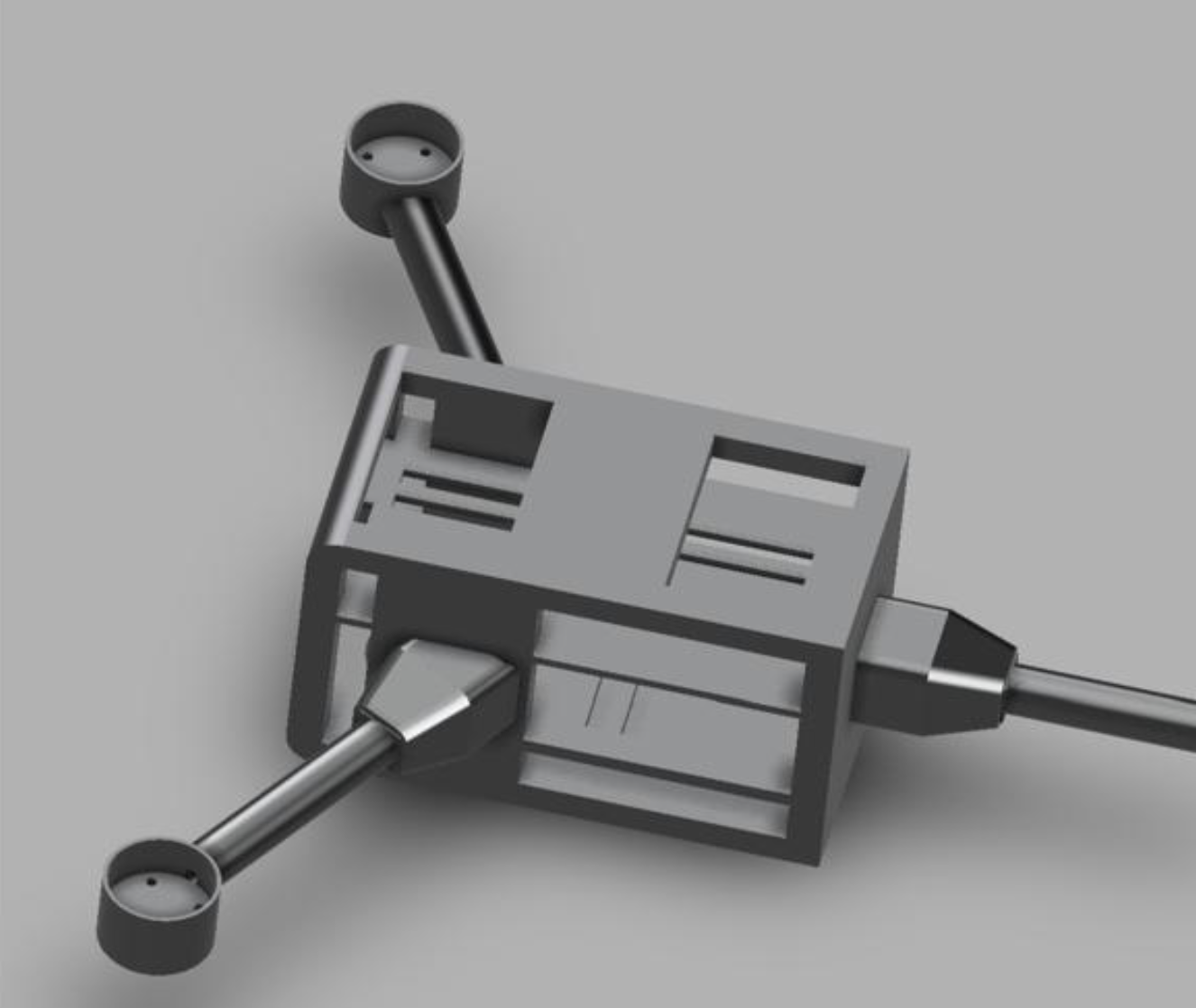
Iteration 1
Initial concept developed to establish the overall tricopter configuration and component layout.
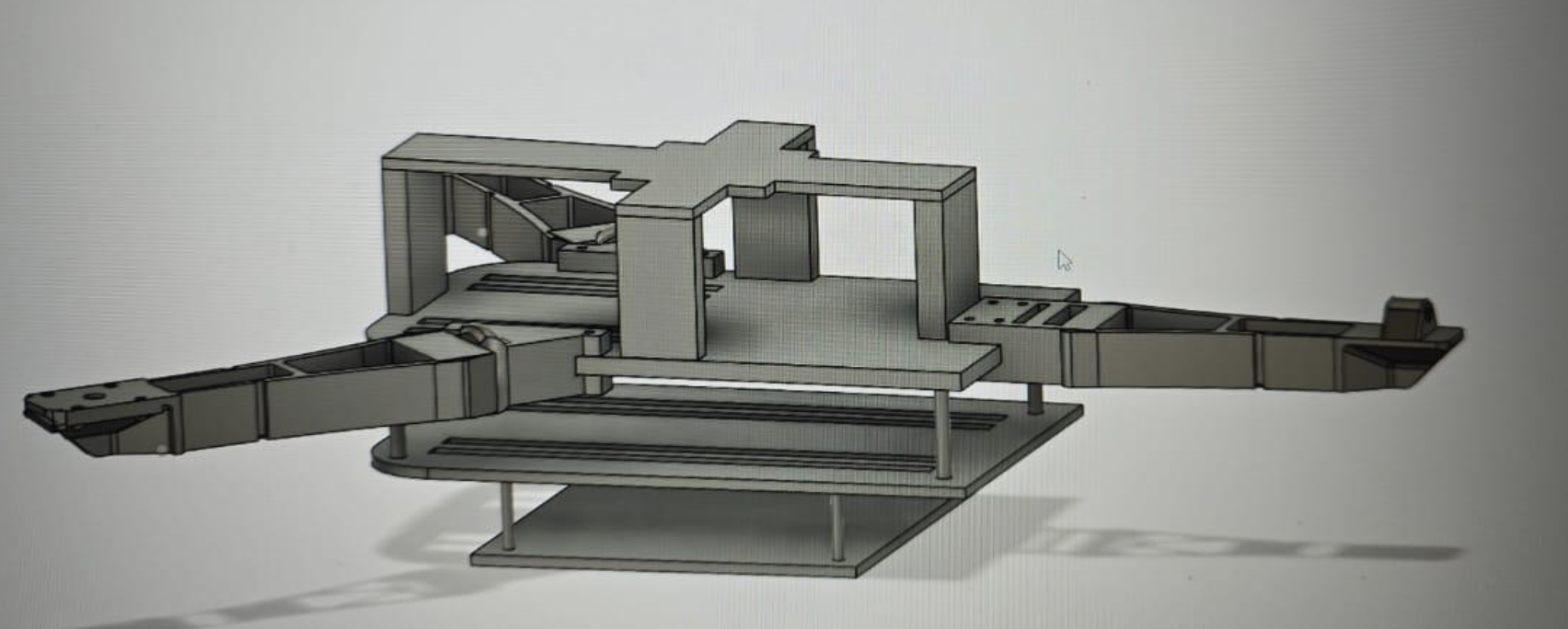
Iteration 2
Structural layout refined to improve integration, accessibility and overall airframe performance.
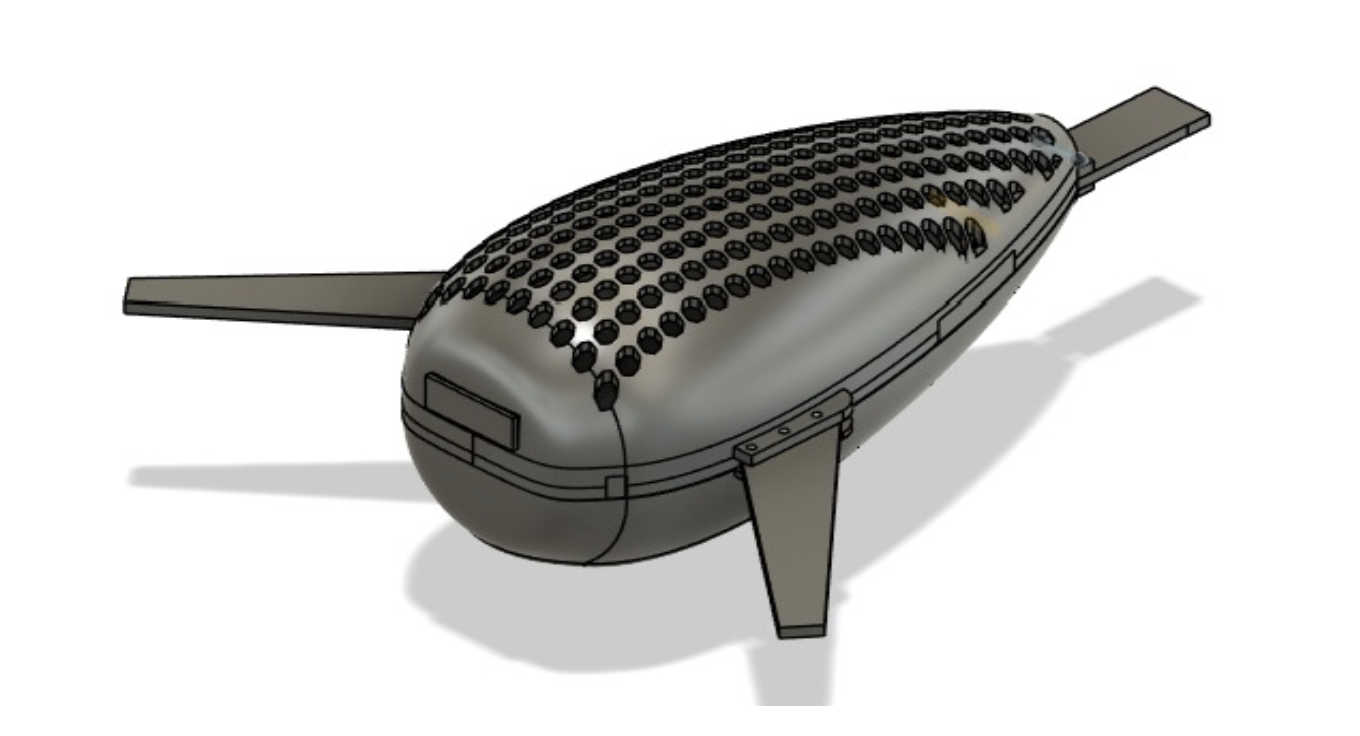
Iteration 3
Final configuration prepared for detailed design, manufacturing and prototype assembly.
Final CAD Assembly
The final tricopter assembly integrated the airframe, propulsion system, payload, landing gear and avionics into a single lightweight platform. The design balanced structural performance, accessibility and component packaging while meeting the project requirements.
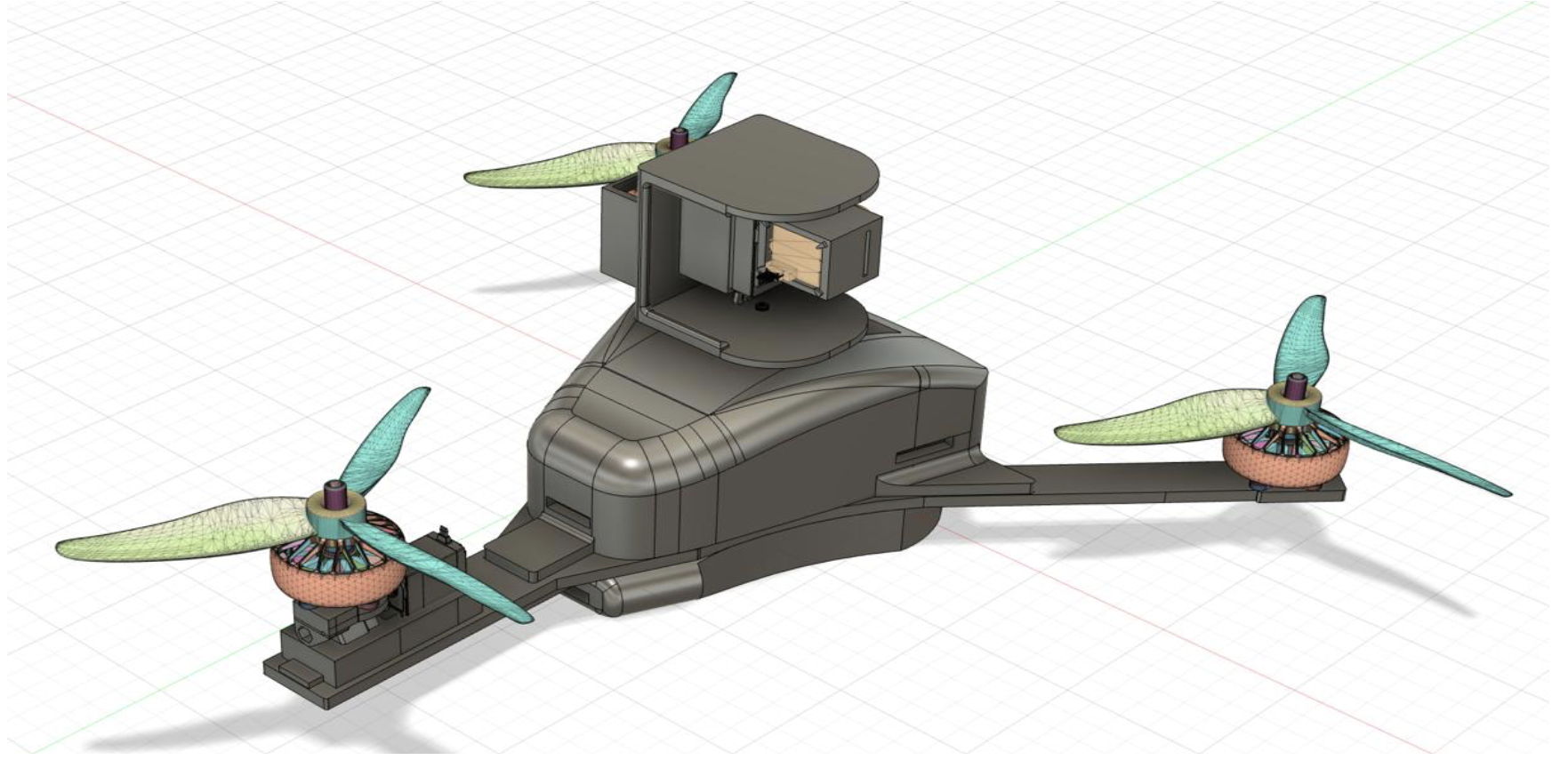
Front View
Final CAD assembly showing the complete tricopter configuration.
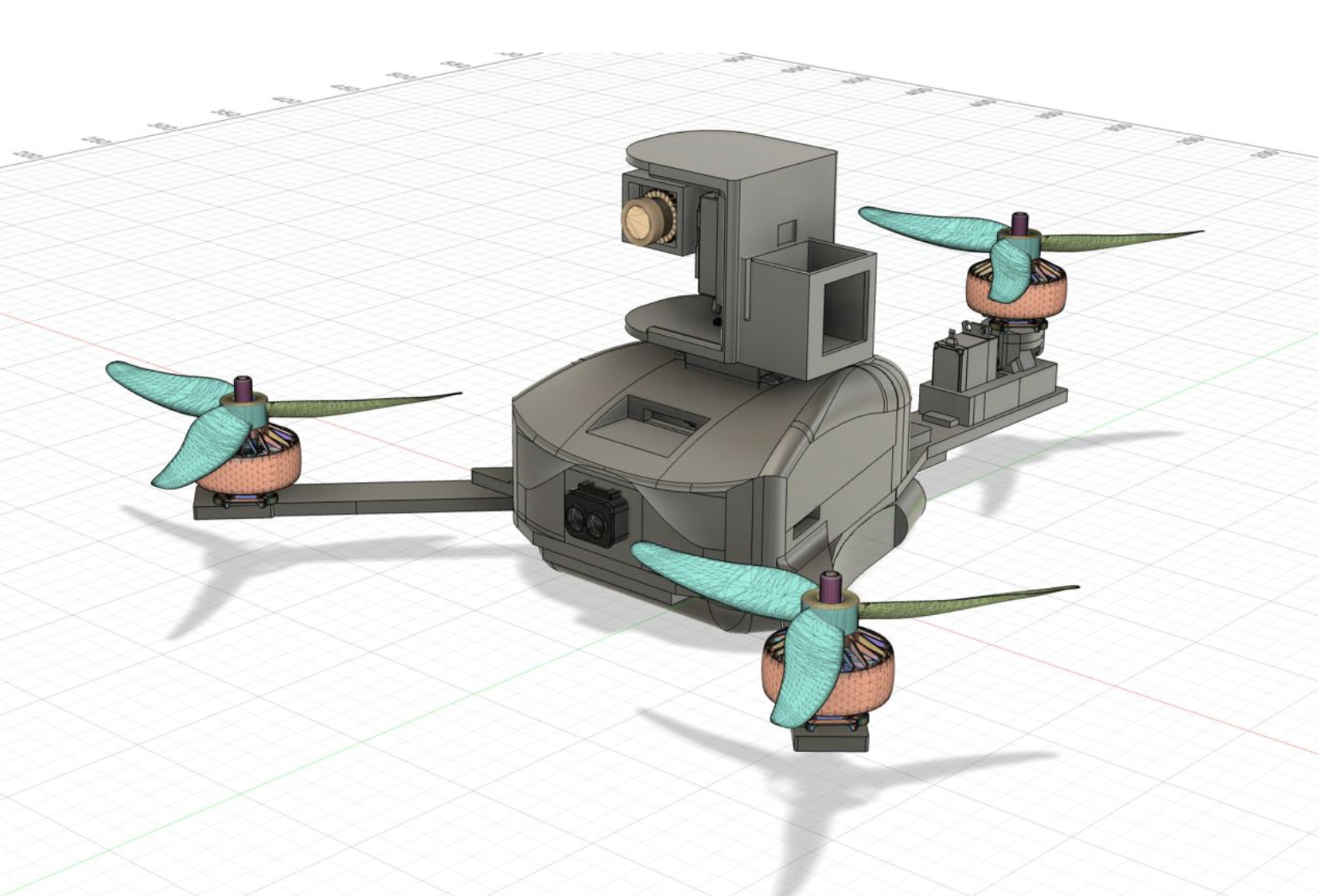
Rear View
Rear view highlighting the propulsion layout and structural design.
Base Plate Design
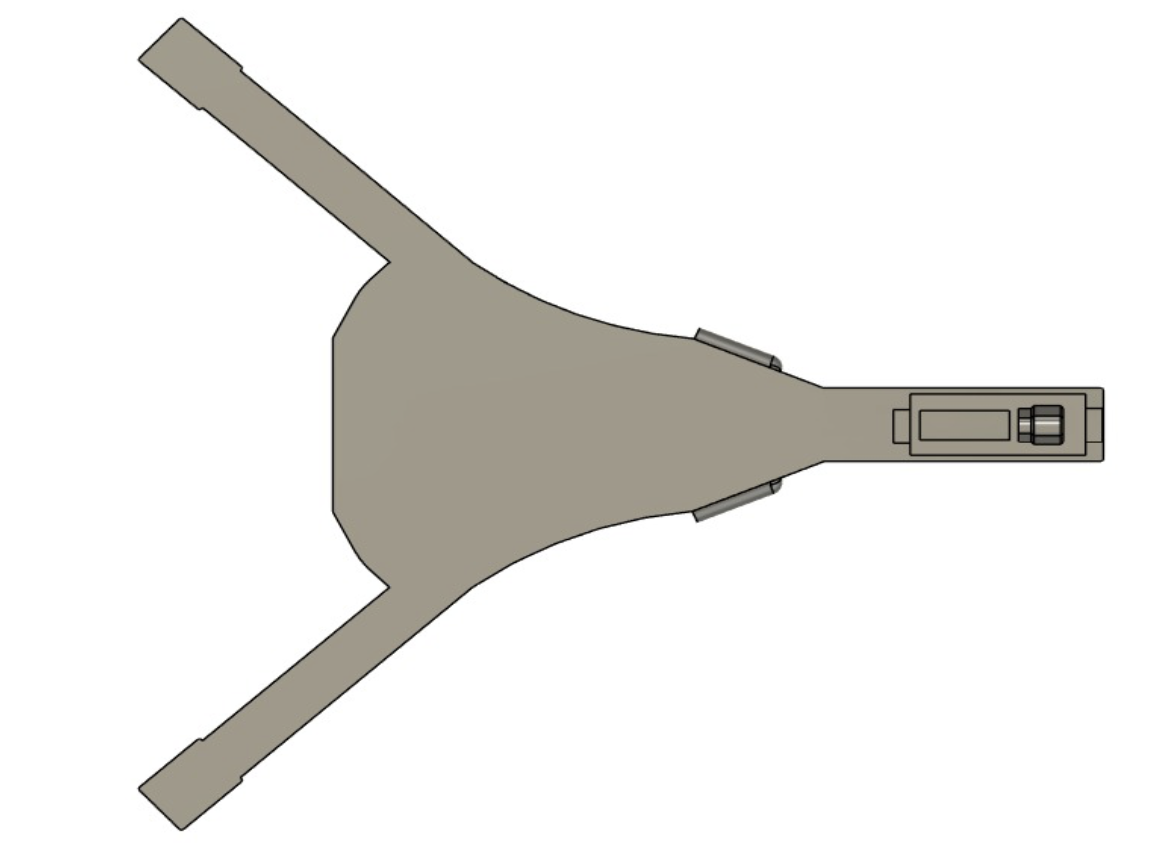
The base plate forms the primary structural platform of the tricopter, supporting the flight controller, power distribution system, ESCs and battery while maintaining a lightweight yet rigid structure.
- Designed using CAD for structural strength and low weight.
- Provided mounting locations for key avionics and electronic components.
- Optimised to simplify assembly and improve internal component layout.
Custom Camera Gimbal
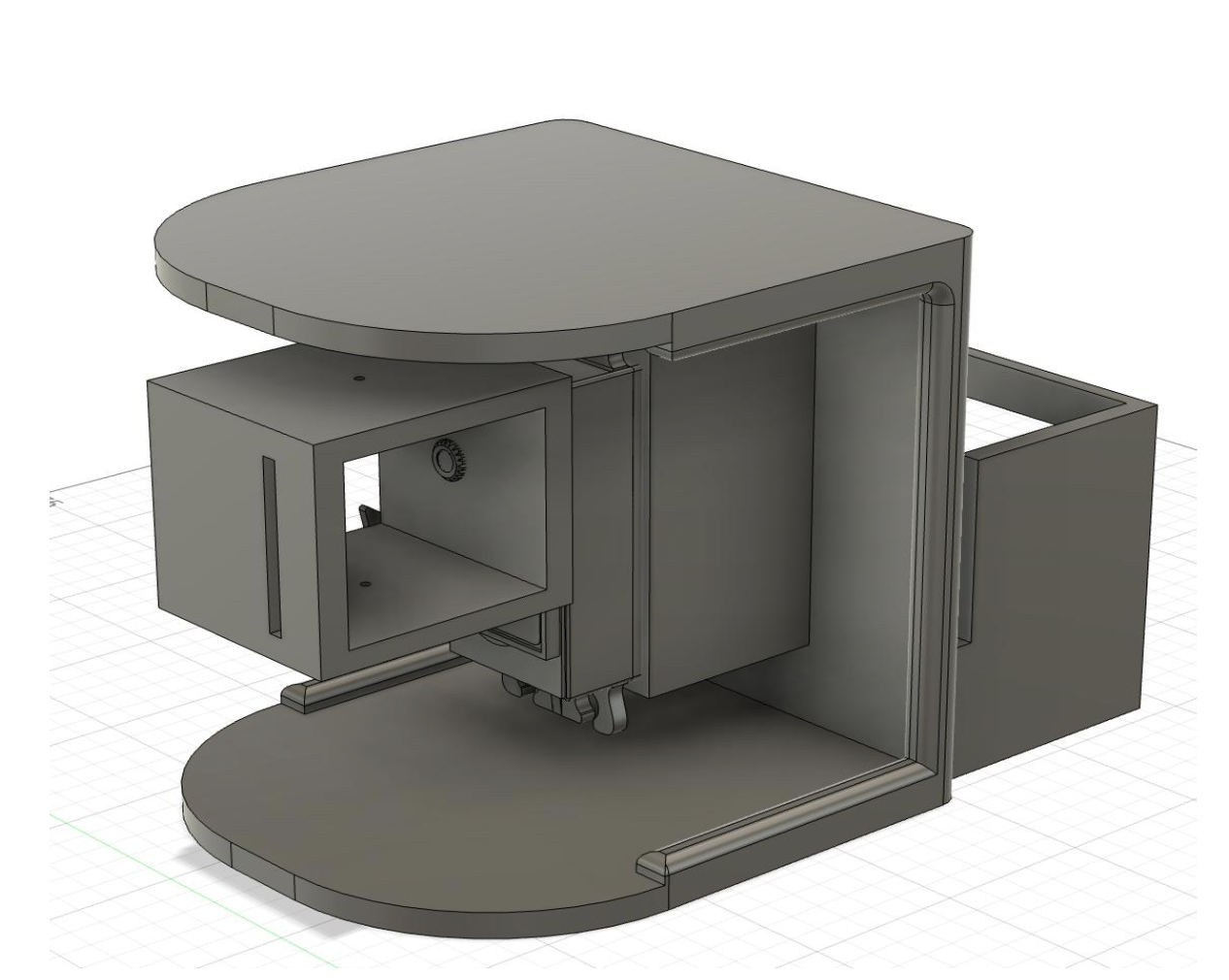
A custom single-axis camera gimbal was developed to provide a stable mounting platform for the onboard camera while maintaining a lightweight and compact design. The gimbal was integrated into the tricopter airframe to support aerial inspection and surveillance applications.
- Designed using CAD to integrate seamlessly with the airframe.
- Optimised for low weight while maintaining structural rigidity.
- Provided a dedicated mounting solution for the onboard camera system.
Flight Demonstration
The completed tricopter prototype successfully demonstrated controlled flight, validating the integration of the airframe, propulsion system and avionics. Initial testing identified minor vibration, which was reduced by approximately 11% following iterative refinement.
Conclusion
This project brought together every stage of the UAV development process, from the first design concepts to a flying prototype. Working on the design, manufacturing and integration of the tricopter gave me a much better understanding of how individual components come together to form a complete engineering system.